UPI changed online payments in India faster than most financial institutions expected.
For users, the process is simple. Open the app, approve the payment, and the transfer is completed in seconds.
For gambling operators, the situation looks very different.
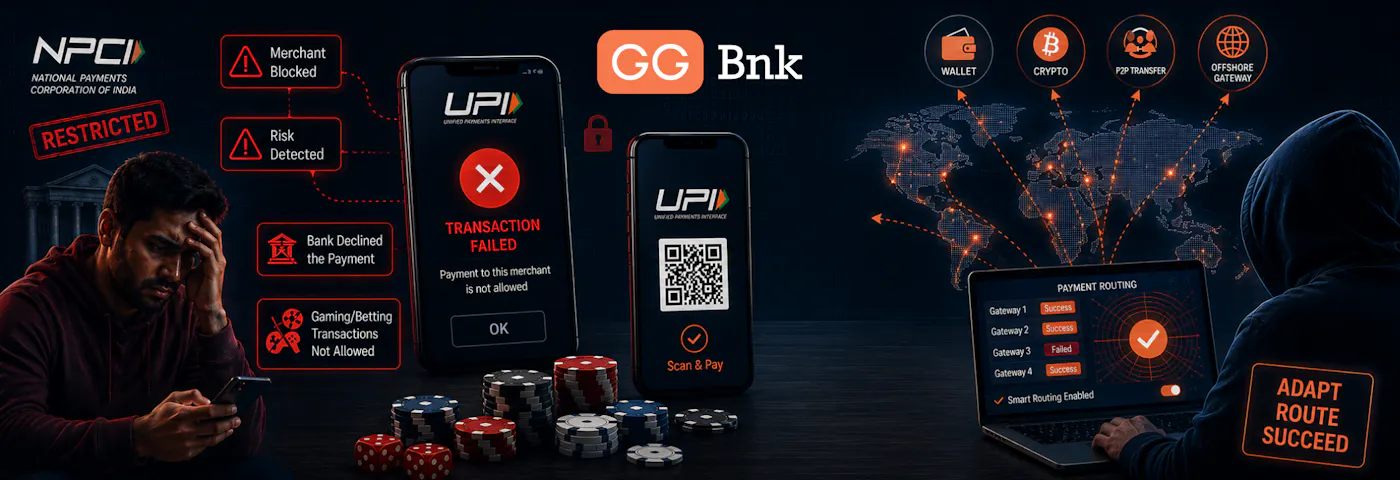
The demand for UPI gambling payments in India is enormous, but stable processing remains difficult. Banks monitor gambling-related traffic closely, PSP policies change without warning, and payment routes that work today can disappear within weeks.
That’s why the real challenge for operators entering India is not user adoption. It’s keeping deposits and withdrawals running consistently.
Why UPI Is Critical for Gambling Payments in India
India’s payment ecosystem now runs largely on UPI infrastructure.
PhonePe, Google Pay, Paytm, and BHIM have made instant bank transfers the norm. Indian customers expect to pay through UPI almost everywhere online, including betting and casino platforms.
If a sportsbook or casino does not offer a familiar UPI option, conversion rates usually drop immediately.
This is one of the reasons UPI payments for betting sites became a core requirement for operators targeting the Indian market.
At the same time, gambling transactions are treated differently from ecommerce, retail, or subscription businesses.
That difference creates constant pressure on payment operations.
How UPI Gambling Payments Work in Practice
From a technical perspective, UPI fits iGaming extremely well:
- instant settlements
- mobile-first user experience
- low-friction deposits
- direct bank transfers
The problem is not the infrastructure itself.
The problem is maintaining stable access to it.
Direct merchant integrations for gambling platforms often become unreliable over time, so operators usually build alternative payment structures instead.
Common setups include:
- QR-code deposits
- dynamic UPI IDs
- wallet-based routing
- peer-to-peer transfer flows
- local payment aggregators
The transaction still runs through UPI rails, but the merchant structure behind the payment is often indirect.
That distinction matters because Indian banks monitor gambling-related merchant activity aggressively.
Why UPI Gambling Transactions Fail
Most failed India gambling transactions are not caused by technical errors.
They fail because of banking risk controls and compliance filtering.
Bank Restrictions
Indian banks frequently block gambling-related merchant activity.
In many cases:
- the payment never reaches final approval
- the user only sees a generic failure notification
- the operator receives little visibility into the actual reason for rejection
This happens especially often with direct merchant processing.
PSP Policy Changes
Even when a bank allows gambling traffic, the PSP may decide not to.
Many providers:
- tighten gambling policies without advance notice
- reduce transaction limits
- stop onboarding gambling merchants completely
For operators relying on a single provider, this creates major instability.
Automated Risk Monitoring
Betting platforms generate transaction patterns that traditional fraud systems often flag as suspicious.
Typical triggers include:
- repeated low-value deposits
- unusually high transaction frequency
- spikes during live sporting events
- rapid payment attempts from the same users
Even legitimate activity can end up filtered by automated risk systems.
Payment Route Shutdowns
One of the biggest operational problems in India is the short lifespan of many payment routes.
A provider that processes gambling traffic successfully today may stop working next month.
Common reasons include:
- compliance reviews
- banking pressure
- internal risk reassessment
- regulatory scrutiny
Because of this, experienced operators rarely depend on a single payment channel.
Why Direct UPI Integrations Rarely Last
Many operators entering India initially try to build direct PSP integrations.
On paper, this looks like the simplest solution.
In practice, gambling sits in a high-risk category, and that changes how banks and PSPs treat payment traffic.
Once transaction volume grows, pressure usually appears across the entire payment chain:
- banks become more cautious
- providers reduce exposure
- acquiring relationships weaken
- approval rates start falling
As explained in our overview of iGaming payment methods in India, the issue is not UPI technology itself.
The problem is the compliance environment surrounding gambling transactions.
What Gambling Operators Use Instead
Operators that stay active in India typically rely on layered payment infrastructure rather than a single integration.
QR-Based Deposits
QR-code payments remain one of the most common solutions because they match normal Indian payment behavior.
Users already trust QR payments in daily transactions, which helps reduce friction during deposits.
Local Payment Aggregators
Some aggregators specialize in high-risk verticals and maintain relationships with multiple payment channels simultaneously.
This allows operators to distribute traffic across different routes instead of depending on one PSP.
Dynamic Payment Routing
When approval rates begin dropping on one route, traffic is redirected elsewhere automatically.
Maintaining this type of routing infrastructure requires constant operational monitoring.
Rotating UPI Handles
Many operators rotate:
- UPI IDs
- beneficiary accounts
- wallet endpoints
The goal is simple: reduce disruption when specific payment handles become restricted.
Why Crypto Became Part of Gambling Payments in India
Crypto appears in many alternative payment methods for gambling in India because it operates independently from local banking rails.
When UPI processing becomes unstable:
- crypto deposits continue functioning
- withdrawals remain available
- chargeback exposure disappears
That does not mean crypto replaces UPI.
Most Indian users still prefer UPI for convenience and familiarity.
In many high-risk verticals, crypto ends up functioning as backup payment infrastructure when traditional banking channels become unstable or start restricting transaction processing.
How High-Risk PSPs Operate Differently
Payment providers that survive in gambling markets usually approach risk very differently from mainstream PSPs.
They already expect:
- unstable routing
- provider turnover
- fluctuating approval rates
- compliance pressure
Instead of treating disruptions as exceptional events, they build infrastructure around the assumption that instability is constant.
That affects:
- transaction routing
- fraud prevention
- payout processing
- redundancy systems
For operators, long-term stability depends less on finding a perfect provider and more on maintaining operational flexibility.
What Actually Improves Conversion Rates
Many gambling operators focus only on approval rates and overlook checkout behavior.
In India, payment UX has a direct impact on conversion.
Elements that usually improve performance include:
- placing UPI at the top of deposit methods
- reducing redirect steps
- minimizing manual form input
- optimizing the checkout flow for mobile users
- using familiar payment patterns
Indian users are accustomed to extremely fast payment experiences. Any additional friction during deposits increases abandonment rates quickly.
FAQ: UPI Gambling Payments in India
Can gambling sites use UPI in India?
Yes, but direct merchant processing is often unstable. Most operators rely on indirect structures such as QR payments, local aggregators, or intermediary routing.
Why do UPI betting transactions fail?
The most common reasons are bank restrictions, PSP gambling policies, and automated transaction-risk filtering.
What is the best UPI solution for gambling operators?
There is rarely a single long-term solution. Most operators combine multiple PSPs, dynamic routing systems, and fallback payment methods.
Are QR-code gambling payments common in India?
Yes. QR-based flows are widely used because they align with standard user behavior and help maintain payment availability.
Why do PSPs stop supporting gambling merchants?
Usually because of compliance concerns, banking pressure, or internal risk policy changes.
Is crypto replacing UPI for gambling payments?
No. UPI remains the preferred payment method for most Indian users. Crypto mainly functions as a backup option when traditional payment rails become unstable.
Conclusions
UPI dominates online payments in India, but gambling operators work in a far more unstable environment than traditional ecommerce businesses.
The user experience remains fast and familiar.
The infrastructure behind it changes constantly.
That is why experienced operators approach India as an ongoing payment-management problem rather than a one-time integration task.
Long-term stability usually depends on:
- multiple providers
- flexible routing
- backup payment systems
- continuous operational adjustments
In India’s gambling market, payment infrastructure requires constant adaptation. Operators who understand this early are usually the ones who maintain stable processing over time.