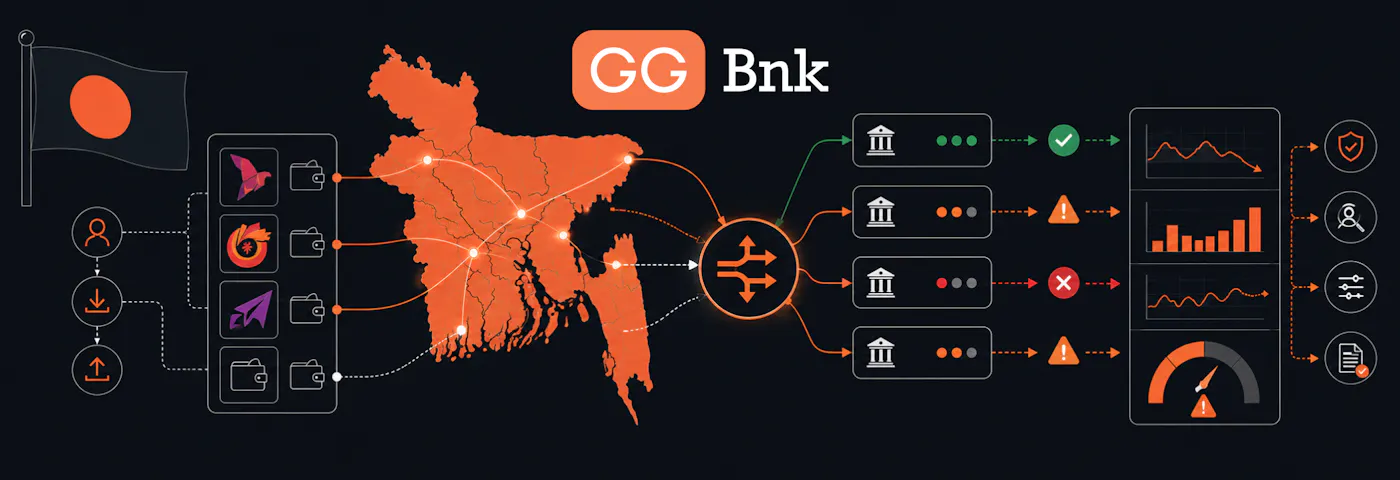
Bangladesh is often mentioned among the fastest-growing betting markets in South Asia. Mobile wallets have become part of everyday life, digital payments are widely accepted, and moving money online is routine for millions of users.
At first glance, the market looks straightforward from a payments perspective.
Many operators discover otherwise.
Getting deposits live is rarely the difficult part. Maintaining stable processing after transaction volume starts growing is where the real operational work begins.
A payment route that performs well during launch can look very different a few months later. Approval rates decline, withdrawals become less predictable, and payment teams find themselves focused on routing performance instead of expansion.
This is where many operators run into the same issue: payment availability and payment stability are not the same thing.
For businesses evaluating a high-risk payment gateway in Bangladesh, the key question is not whether deposits can be processed today. The question is whether those deposits will continue performing consistently as transaction volume increases.
Gambling Traffic Does Not Behave Like Traditional E-Commerce
Most payment service providers were built around retail transactions.
Betting activity introduces a different set of dynamics:
- frequent low-value deposits
- recurring player transactions
- sharp spikes around sporting events
- fast withdrawal requests
- elevated fraud exposure
- additional compliance requirements
A provider may process gambling traffic comfortably while volumes remain moderate. The picture can change once a larger share of deposits starts moving through the same channels.
From the operator's perspective, very little changes.
Players continue using the same payment methods. The checkout experience remains familiar. Transaction flows look identical.
Approval rates can still begin moving in the wrong direction because providers, acquiring partners, and risk teams are reassessing exposure behind the scenes.
That dynamic explains why gambling payment processing in Bangladesh often becomes more challenging as operators scale.
Why Approval Rates Change Over Time
Payment performance during the first few weeks rarely tells the whole story.
A route handling a few hundred transactions per day can look exceptionally stable.
The real pressure appears later.
As transaction volumes increase, operators often encounter:
- transaction monitoring thresholds
- provider exposure limits
- wallet restrictions
- additional banking reviews
- closer scrutiny of payout activity
None of these developments require changes to the user experience.
Players continue depositing exactly as before. The payment method remains available. The checkout flow stays the same.
What changes is how the surrounding ecosystem evaluates that traffic.
This is why strong launch metrics should never be viewed in isolation. The more useful measure is whether approval rates remain consistent after months of sustained activity.
Wallet Coverage Alone Does Not Guarantee Stability
Bangladesh is a wallet-first market.
As discussed in our article "iGaming Payment Methods in Bangladesh: What Actually Works", mobile financial services play a central role in how users deposit and withdraw funds.
The most widely used payment methods include:
- bKash
- Nagad
- Rocket
- QR-based payment systems
Supporting these solutions is essential because they align with established user behavior.
That alone does not guarantee stable processing.
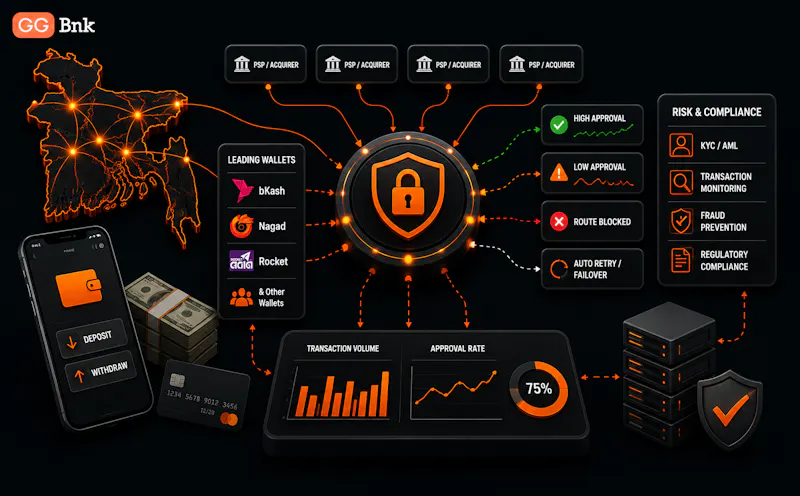
The wallet is the visible part of the transaction. Long-term performance depends on everything happening behind it: routing logic, provider relationships, transaction monitoring, risk controls, and operational flexibility.
Many operators focus on connecting the right wallets.
The more difficult task is ensuring the infrastructure behind those wallets can support growth without losing performance.
Why bKash and Nagad Are Not a Complete Solution
bKash and Nagad dominate digital payments in Bangladesh.
We examined their role in greater detail in "Why bKash and Nagad Dominate Gambling Payments in Bangladesh"
Their popularity makes them essential for deposit conversion.
Operators processing significant volume through these wallets still encounter:
- approval-rate fluctuations
- account limitations
- transaction filtering
- payout interruptions
- routing instability
Demand is rarely the issue.
Maintaining reliable processing becomes increasingly difficult as transaction volumes rise.
Access to local wallets solves one problem. Preserving stable performance over time is a separate challenge.
Concentrated Routing Creates Additional Exposure
A large share of digital payment activity in Bangladesh moves through a relatively small number of wallet ecosystems.
That concentration helps conversion because users already know how to pay.
It also creates dependency on a limited set of processing routes.
When a substantial portion of deposits relies on the same channels, performance becomes more sensitive to provider restrictions, monitoring decisions, and operational changes.
Many payment teams experience the same pattern.
A route performs well, receives more traffic, becomes increasingly important to the operation, and eventually starts showing signs of instability.
This is why routing diversity matters.
The goal is not simply expanding the cashier.
The goal is avoiding dependence on a single route.
Why One Provider Is Rarely Enough
Many operators start with a single PSP.
During launch, that approach makes sense. Integration is faster, operational management is simpler, and reporting is easier to consolidate.
The downside appears later.
If a provider encounters:
- approval-rate deterioration
- compliance reviews
- routing restrictions
- wallet-related limitations
the impact can be immediate.
This is why experienced operators rarely rely on a single provider for long.
Traffic is commonly distributed across:
- multiple PSPs
- separate routing channels
- wallet-based processing routes
- backup payment infrastructure
The objective is straightforward: maintain continuity when one route becomes less effective.
Payment Availability and Payment Performance Are Different Things
A payment method can appear on a checkout page and still underperform.
That distinction is frequently overlooked.
The relevant question is not whether players can make deposits today.
The relevant question is whether those deposits will continue converting consistently six months from now.
Most operators entering Bangladesh focus on availability.
As operations scale, attention shifts toward approval-rate stability, payout reliability, routing flexibility, and processing continuity.
Reliable gambling payment gateways are judged by their ability to maintain performance even when conditions become less predictable.
Compliance Has a Direct Impact on Processing Stability
Compliance and payment performance are closely connected.
Weak controls increase risk for:
- PSPs
- payment partners
- operators
- acquiring relationships
Across the industry, providers increasingly expect:
- AML monitoring
- KYC procedures
- transaction-risk assessment
- fraud-prevention controls
- payout monitoring
These measures are not simply regulatory requirements.
They play a direct role in maintaining provider relationships and preserving access to payment routes.
GG.BNK compliance standards and AML policies can be reviewed here.
What Operators Should Evaluate in a Gambling Payment Gateway
When assessing a payment gateway for Bangladesh, several factors deserve close attention.
Routing Flexibility
Can traffic be redirected quickly if approval rates begin falling?
Wallet Compatibility
Does the infrastructure support the payment methods users already prefer?
Approval Stability
Can performance remain consistent as transaction volume grows?
Payout Reliability
Can withdrawals continue operating smoothly during periods of increased scrutiny?
Risk Management
Does the provider support the compliance and fraud-control requirements associated with gambling traffic?
In practice, these factors have a greater impact on long-term performance than the total number of payment methods listed on a website.
FAQ: High-Risk Payment Gateways in Bangladesh
Why do gambling PSPs struggle in Bangladesh?
Many providers perform well at lower volumes but face challenges maintaining approval rates once transaction activity increases and monitoring becomes more intensive.
Why do approval rates decrease?
Provider restrictions, transaction monitoring, wallet limitations, and banking scrutiny are among the most common causes.
Are bKash and Nagad sufficient on their own?
No. They are essential payment methods, but long-term performance also depends on routing, provider relationships, and operational risk management.
Why do operators work with multiple PSPs?
Multiple PSPs reduce dependency on individual providers and help maintain processing continuity when one route becomes unstable.
What defines a reliable gambling payment gateway?
Consistent approvals, dependable payouts, routing flexibility, compliance support, and the ability to maintain performance as transaction volumes grow.
Conclusion
Most operators can launch payment processing in Bangladesh.
Maintaining the same level of performance several months later is a different challenge.
Long-term results depend on more than wallet access alone.
Routing strategy, provider diversification, operational controls, and risk management all influence how payment infrastructure performs under growing transaction volumes.
Payment methods matter.
The structure supporting those payment methods matters even more.